
Terroir
Montalcino lies between the Val d’Orcia and the southern Tuscan hills, a landscape defined less by uniformity than by variation.
A Philosophy of Time
Altitude, exposure, and soil diversity create a mosaic of microclimates that shape one of Italy’s most rigorous expressions of Sangiovese: Brunello di Montalcino. Its extended maturation is not a technique, but a philosophy of time—structure formed through patience rather than acceleration.
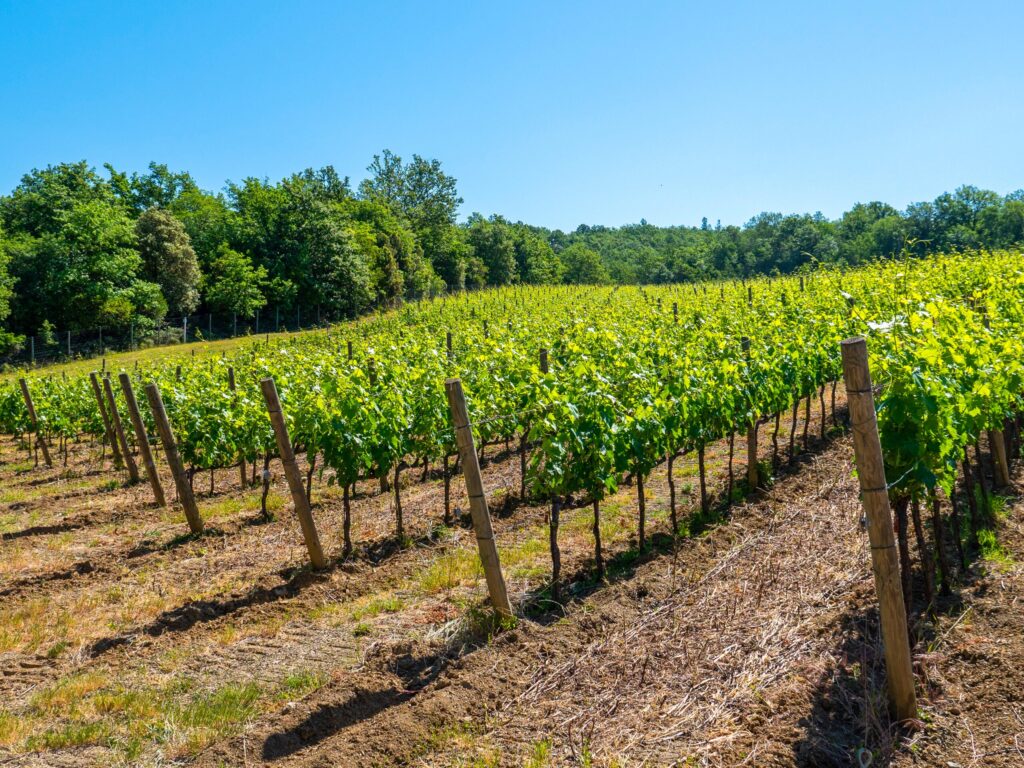
The Immediate and the Mediated
Alongside Brunello, Rosso di Montalcino offers a more immediate reading of the same territory. Fresher and more direct, it reflects the identity of place in a less mediated form.
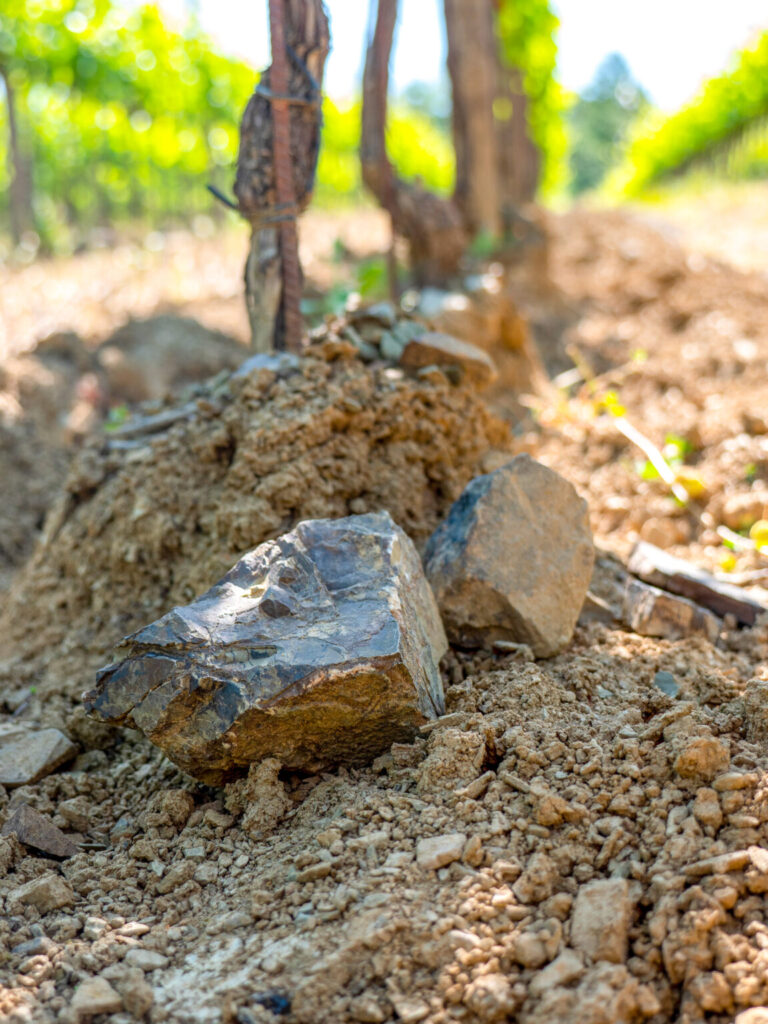
Only the Most Vocated Sites
Across the hill, four primary slopes generate distinct pedoclimatic conditions, producing notably different expressions of Sangiovese. Within this geography of nuance, Tenute Donna Olga is dedicated exclusively to the most vocated sites, where altitude, ventilation, and soil structure converge to form wines of clarity, tension, and precision.
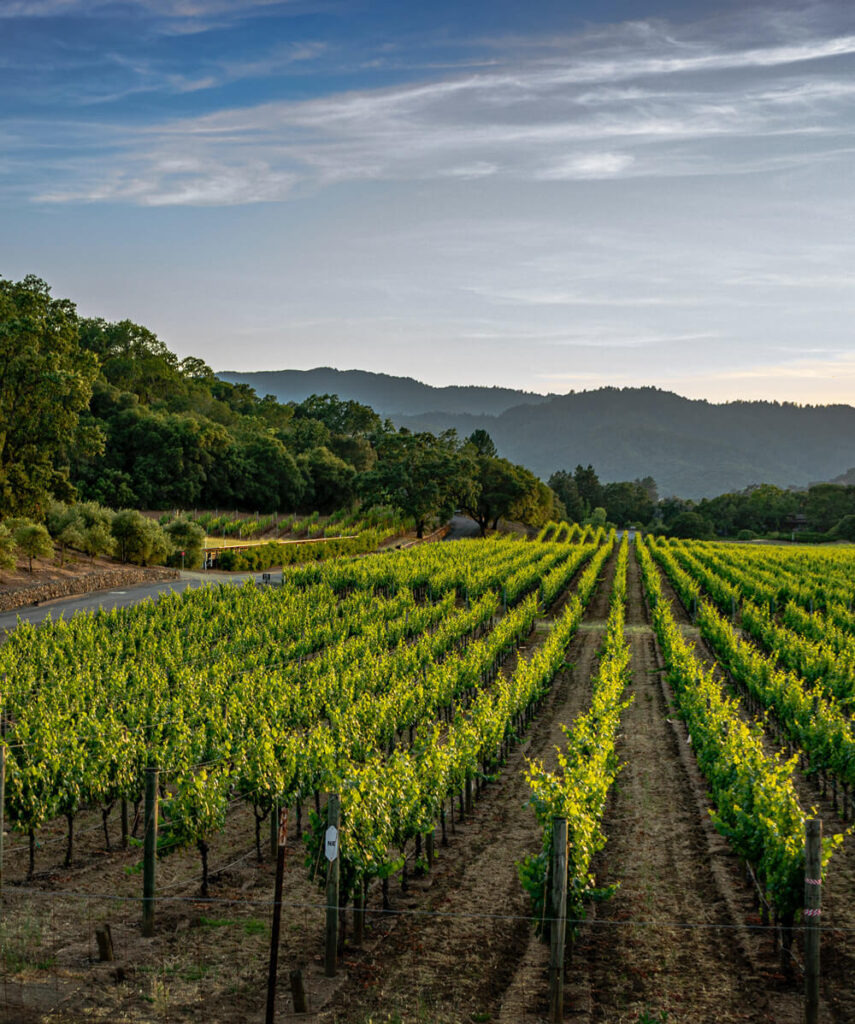
CLOS degli AMODEO VINEYARD
The Clos degli Amodeo vineyard is located on the southeastern flank of Montalcino, along the historic Via Francigena corridor and a short distance from the Abbey of Sant’Antimo.
The estate extends across approximately 3.5 hectares, divided between parcels dedicated to Brunello di Montalcino and limited production of Super Tuscan wines.
At around 300 metres above sea level, this sector is shaped by a balanced mesoclimate influenced by altitude, constant ventilation, and the moderating effect of Monte Amiata. Strong diurnal variation allows for slow, complete ripening while preserving acidity and aromatic definition.
The soils are heterogeneous, composed of sandy and silty marine deposits, quartz-rich fractions, and deeper volcanic-derived elements linked to Monte Amiata.
Here, Sangiovese develops with linearity, aromatic clarity, and finely structured tannins, defined by freshness and mineral precision.
DONNA OLGA VINEYARD
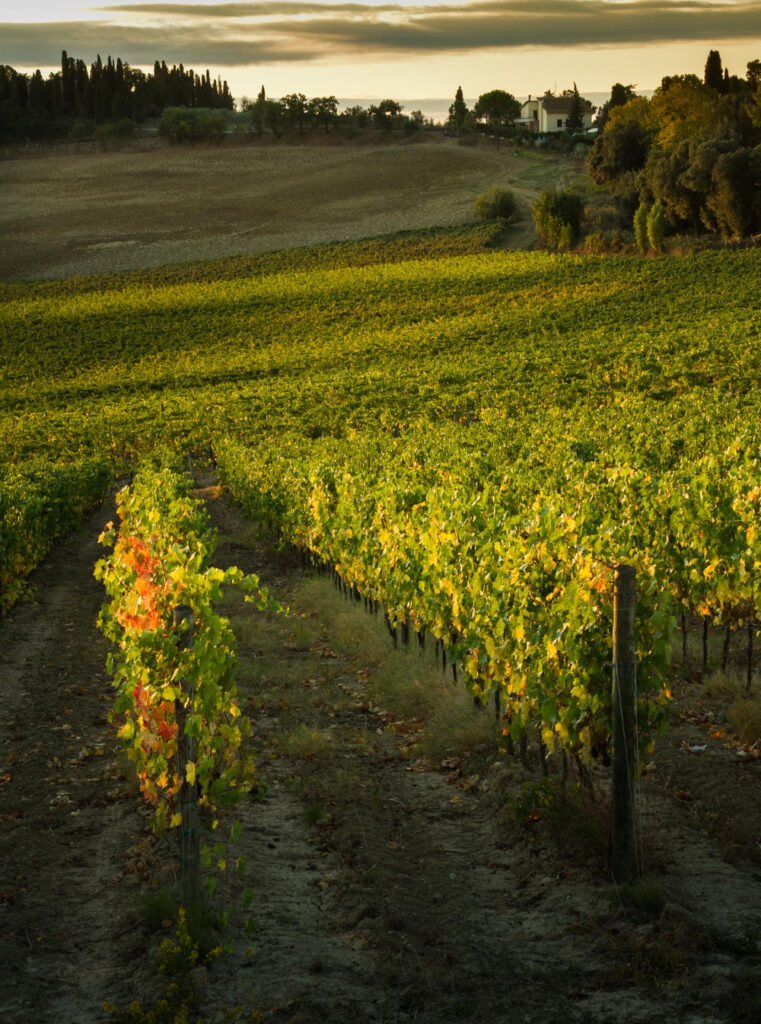
The Donna Olga vineyard is located on the high southwestern flank of Montalcino, above Località Tavernelle and overlooking the Argiano area, at approximately 400 metres above sea level.
This is one of the most ventilated and expressive sectors of the hill. Constant airflow and pronounced diurnal shifts slow ripening and preserve aromatic tension, even within a naturally warmer exposure.
The soils are predominantly sedimentary, composed of clay-limestone matrices, marl, sandstone, and fragments typical of the Tuscan flysch system. This structure ensures both drainage and water retention, limiting vigour while encouraging deep root development.
In this site, Sangiovese expresses tension rather than weight: red fruit precision, vertical structure, and finely grained tannins shaped by altitude and exposure.
The landscape remains deeply cultivated, defined by cypress corridors, historic villas, and agricultural gardens—an environment where nature and human cultivation have long existed in equilibrium.